Someone’s Gotta Write It
I’ve been thinking about a complaint I see with some regularity these days: “I want more critical book reviews.” Or “I’m sick of X type of writing, I crave Y.” These little whines are all over Substack, but they seep out into other social media and sometimes take shape in blog posts or essays. Ok, I think every time I encounter one, why don’t you write it? It’s almost always writers, after all, who lodge these complaints. They should know you can create (some of) what you want to see in the world, including art.
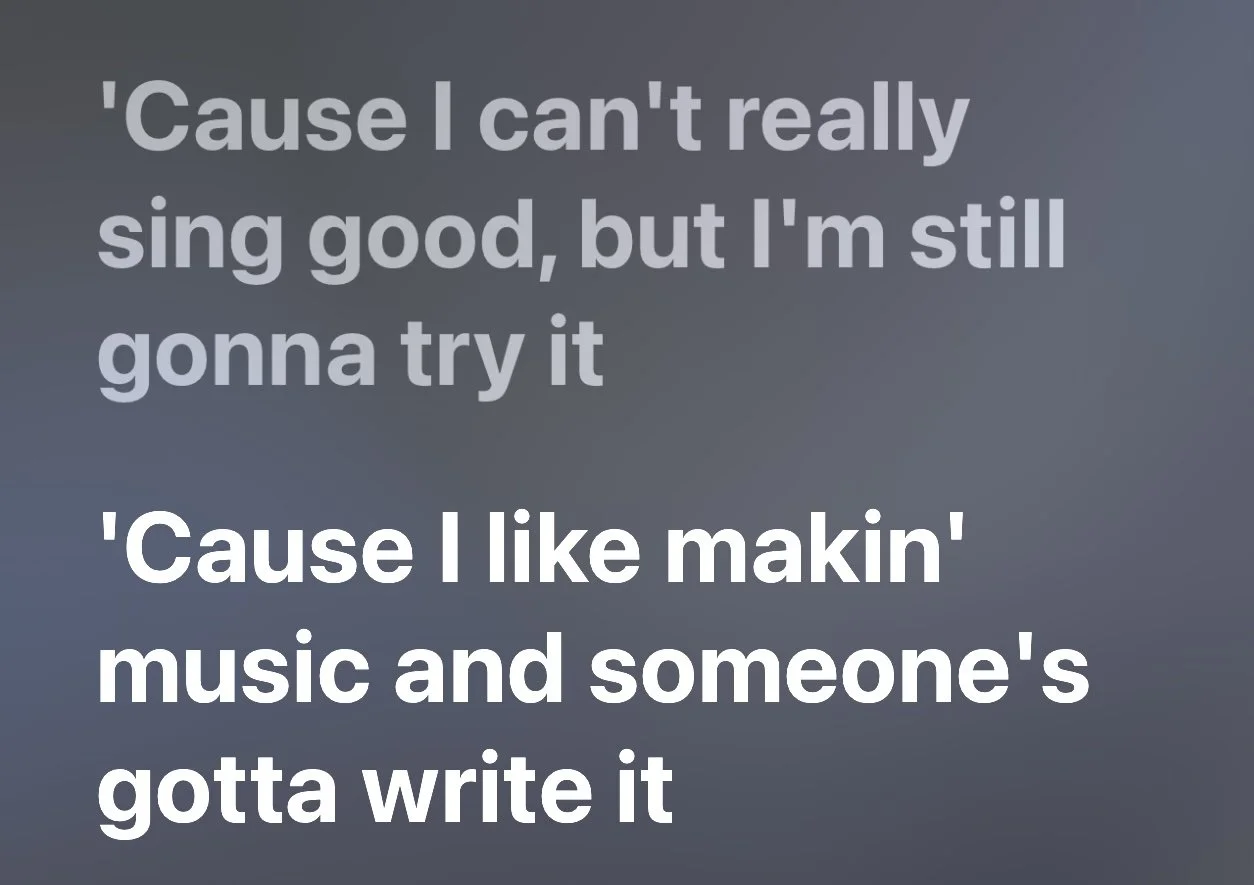
An insight I wish everyone took to heart, from Ninajirachi’s “Sing Good.” (Appropriately, the weakest song on the album.)
And if they don’t want to write it, why not facilitate the work being in the world some other way? Anyone can start an online magazine. It doesn’t require money. “Exposure” has been a bogus currency since the Obama years but people still write for free. Increasingly, it’s the only way we write at all—if we’re lucky enough to not have to pay to be published in the form of submission fees.
I’m not saying the effort will be easy, although it might be easier than expected. And if it’s hard, so what? Do it anyway if it matters to you. Americans have been indoctrinated into consumer mentality for our whole lives, groomed to be lazy lovers of convenience who believe that frustration is a fate worse than death. But most worthwhile, important, and necessary things are not easy. “Hard” doesn’t mean “impossible” and thinking that “hard” means “you shouldn’t bother” is A.I. brain. It’s not the way of the world to magically cater to our desires. Challenge is the only path to satisfaction but I guess that’s easy to forget, or easy to never learn.
But maybe it’s not a mentality problem. Maybe the issue is a sense of lacking collaborators, or not seeing the opportunity for collaboration. In my experience, having even one person do something with you makes what you’re doing 80% more achievable. The easiest, most invigorating writing I’ve done has been with others, and I usually feel great contentment with what we create together. Cooperation introduces plenty of problems and challenges of its own, and if you partner with someone who isn’t worth a damn, it’s possible that they could squander your energy and optimism—and money, should you have any. But if you find someone whose vision aligns with your own, square wheels become round. Again, I am not trying to romanticize or minimize the risks. You could form a band with your best friends, and end up with no friends and no band. But you could not form the band, grow apart from those friends, and end up in the same place except worse, because there will have been no music.
In all the recent annoying discourse around Madeline Cash’s debut novel, I did not see anyone reference this 2023 interview with Cash and Anika Levy about their magazine, Forever. In it, they repeatedly foreground both the difficulty of their project and the indispensability of working together. Cash says: “Nothing in this process has come easy. We just have to fall on our faces over and over. We have learned so much, but we’re an absolute mess.” And “Our friendship really was at the crux of this project.” And, again, “It’s never easy. We fight constantly.” Levy adds, “These last two issues, they’re definitely the best thing I’ve ever participated in making.” Yeah! Your greatest achievement, built through conflict and struggle and the temptation to give up. That’s life, that’s art. It’s blissful and it sucks. Take it upon yourself to do it, do it with someone else if you can, and die without regrets.
My sense right now is that book culture, reading culture, in the United States at least, is in a state of overwhelming unsatisfied demand. This is extremely exciting and, in my mind, it unites us, us being readers, writers, critics, editors, publishers. Everyone who wants and needs their existence to be full of words and ideas. Personally, I feel that there have never been more options for building a community around writing or reading, and never more options for disseminating and promoting writing whether in book form or otherwise.
But the moment is also frightening and disheartening, because old infrastructures are skeletal and the lack of financing feels unsolvable. I find myself thinking this isn’t sustainable of the continual decimation of the media—by which I mean the mass layoffs, the elimination of entire websites and magazines and weeklies and local news—which has been happening aggressively for at least ten years, but what do I mean by that? For whom isn’t it sustainable? In what way? The number of people with real money is minuscule and shrinking, and rich people see greater value in quashing the dissemination of beauty and information than in propagating it. Not long ago, eccentric oligarchs got some social cachet and ego boost from “funding the arts.” This is less true now, for reasons I won’t try to delineate but which I do suspect relate to their monopoly on violence.

Yet despite the winnowing of outlets and the absence of monetary compensation, despite the non-consensual omnipresence of A.I. and the deafening, incessant screams of its worshippers, people’s desire to make art and music and particularly to write seems more evident and acute now than I can recall in my life to date. It must be connected to the dismantling of all social support and sops, the lie of America flamboyantly flaming out, extinguishing more and more lives as it goes. The horrors activate our impulse to make meaning, I think.
As I am fond of reminding myself, there is no human circumstance so degraded that people give up on art. They sing and paint in prison, compose poems at the risk of detention or execution, write while blind and dying in a body that can barely move. What excuse do I have not to do it? The dream of the computer or social arrangement that eradicates human creativity is like the dream of the weapon that eradicates life on the planet. Unfathomable damage will be done in the pursuit, but this perfectly annihilating product will never exist because we aren’t the gods we fancy ourselves to be. (Thank you, tardigrade. Thank you, beautiful word, beautiful reality, extremophilia.)
This is not sustainable means that the absence of art (music, books, writing) and, crucially, conversation about art, is not an endurable circumstance for anyone who loves art. So we can’t submit to conditions in which art and the discussions that erupt in its wake are eliminated. Making money the most indispensable ingredient of your artistic venture, as far as I can tell, almost inevitably relegates that project to impossibility. I personally am not willing to go Linda Evangelista mode about my writing, though for the record, she said nothing wrong. The fact, as ever, is that I’m gonna do it anyway, even if it doesn’t pay. It was once trendy on social media to deride a stance like this as privileged. Unfortunately, it’s trendy to say many stupid things, online and off.
Forever magazine, by the way, in spite of its visibility, cost, and famous contributors, doesn’t pay for work and does not seem to make any money. In a more recent interview, Levy said, “we pay for the printing and shipping ourselves.” If I understand correctly, they price each issue to try to break even after the fact. This is also how I try to run my press, and I am not always successful. We’ve possibly broken even across all titles over time, but I can say with confidence that some titles have been published at a (big) loss, often by virtue of my own ignorance. I too, still, have to fall on my face and learn the hard way. But the fact of publishing is that most books lose money, which, in my opinion, validates my conviction that books are fundamentally not “for” making money. Even brand-building grifter types who publish books to prop up their own status as an authority sometimes reveal this truth by spending a shit ton on outside publicity, so much money that—you guessed it—they essentially pay to have people buy their books. How delicious the taste of one’s own tail! Let’s put a pin in this and move on.
I consider myself very lucky to come out of a DIY legacy, which found me right after I’d given up on academia and bourgeois self-advancement as a writer because the climate grossed me out so much. I was an editor and contributor with $pread magazine, then I co-founded Tits and Sass. Then I co-founded TigerBee, and co-founded (haha) Reading Writers. The one thing I’ve done “by myself” was run a monthly reading series in New York for two years. I was the organizer, but each event required 4-6 other writers and a venue, usually a bookstore, to host, and my then-boyfriend now-husband Sam would make up a professional looking flyer. Speaking of former boyfriends, many years ago my previous partner gave me Ariel Gore’s How to Become a Famous Writer Before You’re Dead. Silly title, but a great book that advocates doing everything and anything yourself, from distribution to promotion. It made me feel further empowered to avoid situations and systems I find morally repugnant.
Here’s a peek into my recent considerations in this vein:
Should I start another monthly reading series? Would it be sustainable in DC? What if I did something online? (Everyone hates online, right? But what my monthly online reading series presupposes is…maybe they don't.)
Should Reading Writers start a website for book writing? A zine? Or a book club? Aren’t there already too many of those? Should we charge money? Should we not? Can we pay people? Can we not?
My persistent sense of obligation in this realm is weird. No one has ever told me I’m good at it. No one asks for whatever it is that I’m doing/making. It’s not like these ventures lead to traditional indicators of success (awards, money, profiles, prestige.) I’m not sure what numbers are supposed to mean in these contexts, either, short of those numbers being so high that the other metrics (money, prestige) come into play. Getting 8 people to join an offline book club, for instance, seems pretty good to me. Getting 30 online seems like kind of a lot. My reading series was consistently well-attended and people I invited kept saying yes, so it kept going. I don’t remember caring about Tits and Sass traffic. I don’t look at any data related to the podcast because I think numbers can underwhelm but even if they’re “good” (which I guess means higher than I expect—already an arbitrary amount,) numbers can’t answer these questions:
Do I build cooperative things that are worthwhile?
Are these projects beneficial and valuable to the participants and an audience? Or only to the participants? Does it have to be beneficial for both?
What are the exact parameters by which this project justifies its own existence?
These inquires don’t spring from personal anxiety or insecurity. They come out of the same sense of responsibility which impels me to these endeavors in the first place. I don’t want to be wasting everyone’s time. But I’m genuinely not sure how to answer.
I think that’s because these questions are moot; the activities are inherently worthy. They are ends, not means, so they can’t be evaluated like they’re tactics and procedures. It doesn’t bother me to imagine making something with a friend that only I and the friend enjoy, even if it’s a little sad to offer it up to the world and have the world take no notice. It would be infinitely sadder to do something with a friend only if, or because, it were going to further benefit me in some way.
The involvement of people I love, respect, or simply find interesting is ultimately the only incentive I need. I like doing things with friends or people who become friends through the doing, or people who I don’t maintain a relationship with after—that’s ok, too. I even kind of like doing things with people who piss me off since incompatibility can be compelling and generative in its own right. The thing we make doesn’t have to last a long time or earn any money. I enjoy interacting with people and I especially like trying to create something together.
But back to money, and back to the notion of numbers as a referendum on one’s art, and back to the big PR push behind the Madeline Cash novel, which I have not read and almost certainly never will because the oppressiveness of the marketing has indicated to me that I won’t enjoy it. And, if my assessment is right, that means the marketing did its job! Every book is not for everybody, and I’m a big believer in locating the right readers rather than indiscriminately roping in as many as possible.
A lot of the aversion to Lost Lambs’ hype was certainly due to jealousy and sexism, but there was also the normal, sound reaction of people fed up with being pressured by corporate forces. It’s offensive to be pushed towards consumption of anything, especially if the push is charmless, a shove delivered by someone wearing a fake smile as opposed to a coaxing, warm touch on the elbow. The earmuffs are cute, but I’m not a merch-first type of reader. I don’t need a Happy Meal toy, I just want to read a good book. I get the logic behind these products, I think. (It’s a way to spread awareness without having to make people post, read, or pose with an actual book, right?) It’s not like I can’t be generous about marketers’ attempts to “break through.” It’s just that I probably already own more books than I can read before I die and these gimmicks, as well as the release-timed week of unavoidable sycophantic coverage, are off-putting to me.
The mainstream publishing industry, especially to those who participate in it or want to participate in it, is kind of pathetic right now. (That it’s run by private equity does not help its reputation.) Books are being sold, but the general consensus is that the industry doesn’t know how to sell them, only a small number of authors do, and many amassed their readerships through self-publishing, which includes AO3/fan fiction—material that exists for years without financial compensation. With the best-sellingest names now, the publisher is a manufacturer and distribution service, nothing more. That’s not appealing to anyone wedded to a dream of earning modest fame and a comfortable wage by writing whatever idiosyncratic literature they want and leaving everything else up to the publisher. Those dreamers need the publisher to be really good at marketing, and they’re not. I wish that were different, too.
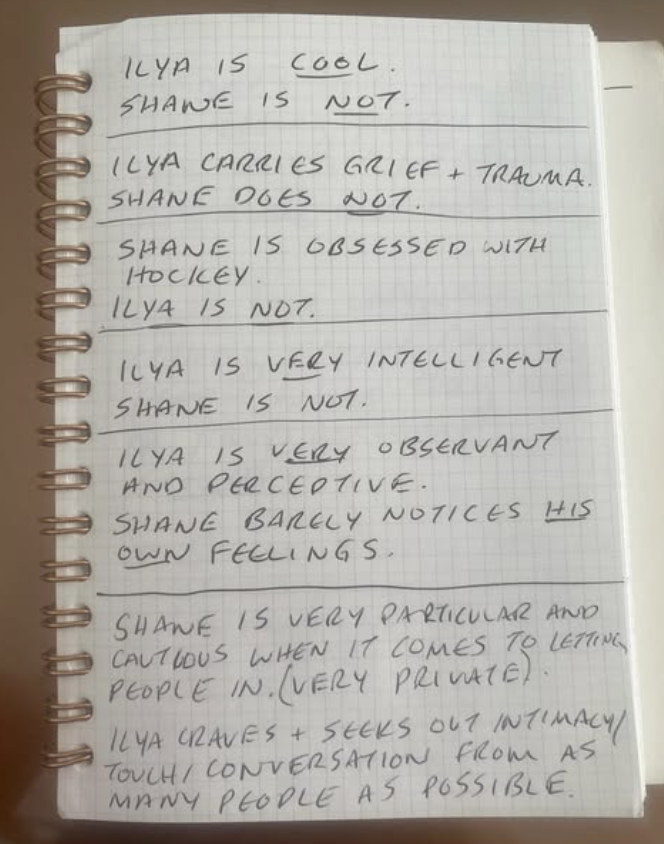
I think about this approximately 5x a week
The reaction to Lost Lambs’ hype that depressed me most was a snide comment I saw about how after all the spectacle, the book wouldn’t even sell well and most people would have no idea who Madeline Cash is. Ok? Are we supposed to be happy that publishers aren’t good at getting people to buy a book, not even when they put their whole pussy into it? Or that contemporary authors are doomed to obscurity even when they’re hyped up like stars? How many books should she sell before she’s allowed to have the press she got? Would you rather hear more about Rachel Reid?
The internet and globalization and revolting accumulations of wealth have thoroughly fucked with our sense of scale, and we fail to recognize that at our peril. I saw a guy on Substack claiming he’d sold 30,000 books over his writing career but still hadn’t made it—become a mainstream name, I guess? Become an industry unto himself like J.K. Rowling or Stephen King? Won an award? This shit is so stupid. You found tens of thousands of readers but you’re an underdog because what, there’s no statue of you on a campus quad? The time has come for us to collectively get a grip. These pity parties are revolting.
I love this corrective, from Zoe Yang: “Back when my ancestors had generational wealth, they were the type of Chinese elite who would wander around their gardens composing poetry about the plants and the birds and the moon for audiences of like, three people. That is basically what I’m meant to do.” Three people should be enough. Think of who you love most in the world, and you realize one person can be enough. Hell, just do it for yourself. Everyone needs to eat and we all want disposable income, but if you write in pursuit of riches and fame, you are an embarrassing loser.
It is a problem when people can’t earn a living (disgusting phrase,) full stop. It is also a problem when the only way they can earn a living is through exploitative, dangerous, soul-killing, or manifestly evil jobs. Objections to DIY arguments tend to revolve around how wrong and bad it is when writers can’t sustain themselves economically with their writing. Indisputably, it would be nicer to live in a world where we could. Is the attendant proposition that creative pursuits should stop because the dozen genocidal fascists who control the world’s resources won’t invest in us?
I’ve seen some writers say that readings should pay their participants, which reminds me of the implication or outright claim spurring that infuriating controversy about n+1’s editor salary—that if a magazine can’t cut everyone involved a fat check, it shouldn’t exist. If you don’t understand why this is madness, we think very differently about the world and I’m frankly frightened of you. Oh for sure, everything you do with other people is exploitative if you’re not being paid to do it. No one should invite you to something that entails you sharing your work unless they’re ready to pay up. I can feel the liberation approaching. It’s right outside the door, it’s almost in the room with us…..
I don’t think anyone advocating for DIY ethics is saying a collective zine can replace international journalism, not unless they’re a stone cold dingdong. This isn’t about inventing an apple that tastes and looks exactly like an orange. This is about being realistic, adaptable, and determined instead of grandiose, negative, and absolutist. I have so many more notes that I’m not even going to look at because this is already long and getting a little mean. But if you want to make something together, please, always, let me know. If you have any thoughts about any of this, share them with me! Thank you for reading.